
Episode 45: Durability and Fatigue Resistance with Coaching Legend Joe Friel
Joe Friel — author of the Triathlete's Training Bible, co-founder of TrainingPeaks, and one of the most influential coaches in endurance sport — joins me for a conversation centered on durability: what it is, how it is built, and why it matters more than most athletes realize. Joe explains how he developed the concepts of heart rate decoupling and efficiency factor in the early 2000s — more than fifteen years before sports scientists gave durability a name — and walks through the three-phase training structure he uses to build durable athletes from the ground up. The conversation covers zone one and zone two training, the discipline of race-specific pacing, AI's role in coaching, and Joe's revised edition of Fast After 50, due out in June 2026. If you work with long-course athletes, or if you are one, this episode will help you understand why an athlete holds on late in a race versus one who doesn't.
Episode 44: Triathlon Only Has Two Zones
One of the issues with the established training zone systems out there is that, very often, there are more zones than we need, particularly for multisport training and racing. When zones were first established, most of the data came from road cyclists, who have more dynamic events and different demands placed upon them while competing.
In a triathlon—even a short course triathlon—the goal is a steady, moderately-hard effort that you can hold for a long time. In this monologue episode of The Infirmary, I make the case that triathletes need just two training ranges: endurance and speed. I talk about how training actually works — oxygen delivery, blood volume, capillary density, mitochondrial function, muscle fiber recruitment, metabolic efficiency — and show why the moderate and heavy exercise domains can and should be collapsed into a single endurance range for multisport athletes.
I also address why a seven-zone system can actually hurt your training as a triathlete, why "anaerobic threshold" is a misleading term, and why your threshold intervals shouldn't be killing you—they are part of the endurance side of things, NOT intensity. We wrap things up with a practical breakdown of how to apply perceived exertion and training intensity distribution across a season.
Links mentioned in this episode:
Jesse Dukes' one-day "How to Get Good Tape" Los Angeles Workshop: https://jessedukes.com/good-tape-how-to-get-it-2/
Book a free training consultation: https://tinyurl.com/mu8d8tux
Join the Campfire Discord community: https://discord.gg/3Uq989QFX4
Episode 43: The Science of Sweat | How to Actually Fuel and Hydrate for Endurance with Tash Cooper-Smith
Sports scientist and triathlete Tash Cooper-Smith from Precision Fuel & Hydration joins The Infirmary to demystify one of endurance sport's most confusing topics: fueling and hydration. Tash breaks down sweat testing, sodium concentration, carbohydrate intake, gut training, and the real science behind cramping — and why the answer to most athletes' fueling problems is rarely as complicated as they make it. She also shares the story of her own athletic journey, from competitive gymnastics to Kona qualifier in four years, and what that experience taught her about personalizing nutrition for performance.
Episode 41: “‘Metabolic Efficiency’ is Just a Fancy Term for Getting Fit w/Elite Endurance Coach Ryan Bolton
Ryan Bolton is an Olympian, competing at the first Olympic Triathlon in 2000, and he is also a long course champ, winning Ironman Lake Placid in 2002. He coaches America’s top-ranked short-course triathlete, John Reed, and coaches or has coached Olympic Morgan Pearson, triathlon legend Ben Hoffman, recent star Sam Long, and many, many others. Ryan and I talk about a huge range of topics, including artificial intelligence (AI) in the coaching space, why “metabolic efficiency” isn’t anything you need to really pay attention to because it will happen as you get fit, and what it means to focus on “$100,000 wins” instead of “$500 wins.”
You can find Ryan at https://boltonendurance.com/ and on his social media accounts: @coachryanbolton and @boltonendurance. You can (and should!) listen to my interview with Ben Hoffman, whom Ryan Coached for most of Ben’s career.
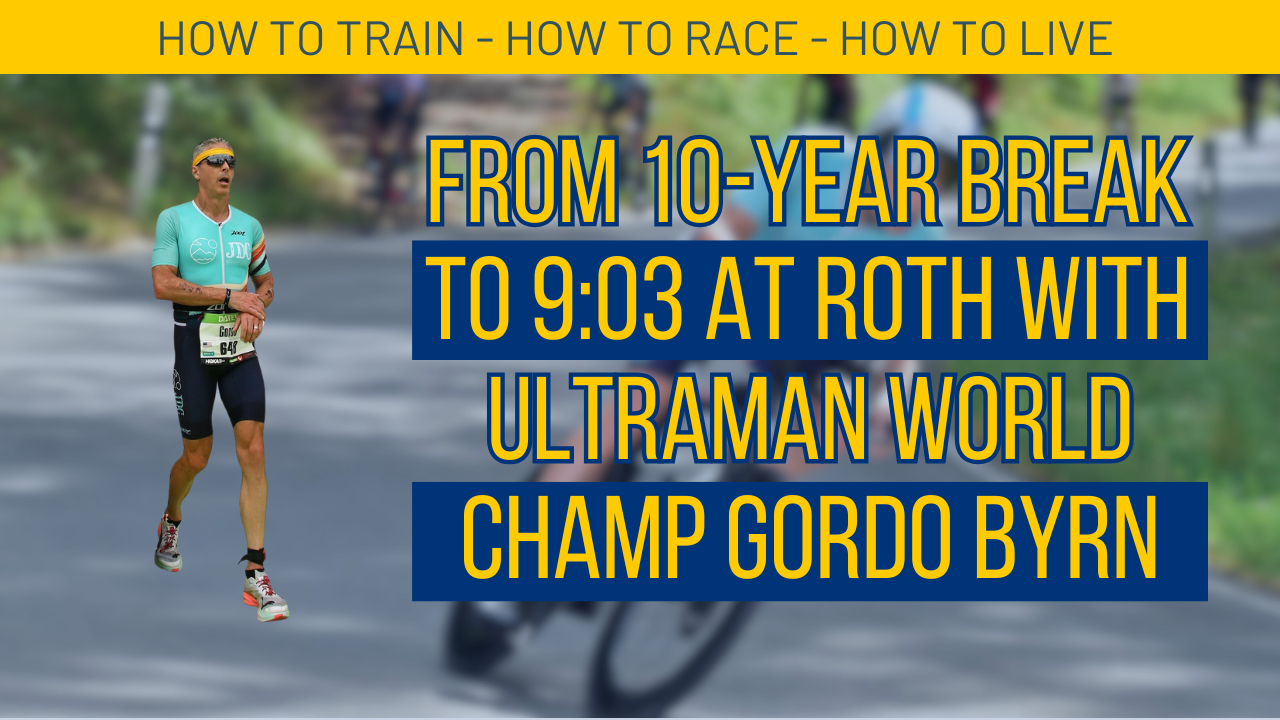
Episode 38: From a Ten-Year Break to 9:03 at Roth: Ultraman World Champion Gordo Byrn
Endurance coaching legend Gordo Byrn joins us to discuss his return to racing after a 10-year break. The 2002 Ultraman World Champion and author of From Lemon to Legend breaks down his training philosophy that led to a 9:03 at Challenge Roth. We explore why consistency matters more than any specific workout protocol, how he rebuilt his aerobic base starting with workouts so easy he didn't believe they'd work, and why most athletes overcomplicate their training. Gordo shares his "10, 20, 50" protocol and explains how patient application of ridiculously easy training builds the efficiency required for world-class endurance performance. Whether you're returning to the sport after time away or struggling to maintain consistency, Gordo offers a masterclass in sustainable high-performance training from someone who's mentored a generation of endurance coaches.
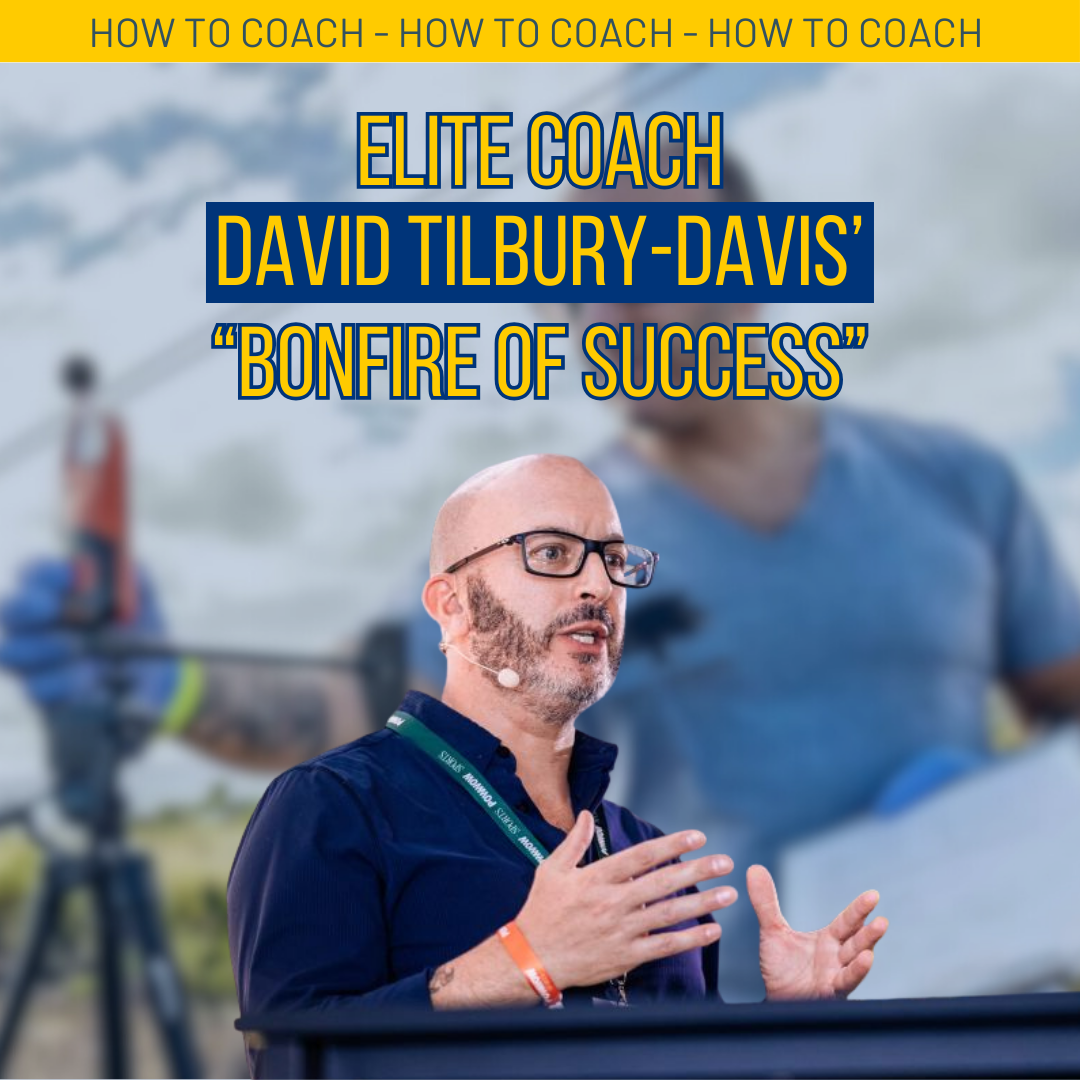
Episode 36: “The Bonfire of Success,” with World Class Coach David Tilbury Davis
David Tilbury-Davis coaches or has coached triathlon household names such as Ashleigh Gentile, Lionel Sanders, Skye Moench, Corinne Abraham, Cody Beals, and Matt Hanson, and he’s been doing so for three decades. In this episode, David explains his “evidence-led” in contrast to “evidence-based” approaches, how he gives athletes autonomy within structured training blocks, and why understanding your race day "poker hand" matters more than race-day magic. We discuss block periodization across the four disciplines of triathlon, how the Norwegian Method is more a product of excellent professionalism, cognitive load in VO2 work, and why even successful performances need analysis. In the moment I found most affecting, David talks about how an athlete deals with setbacks separates the great from the merely good.
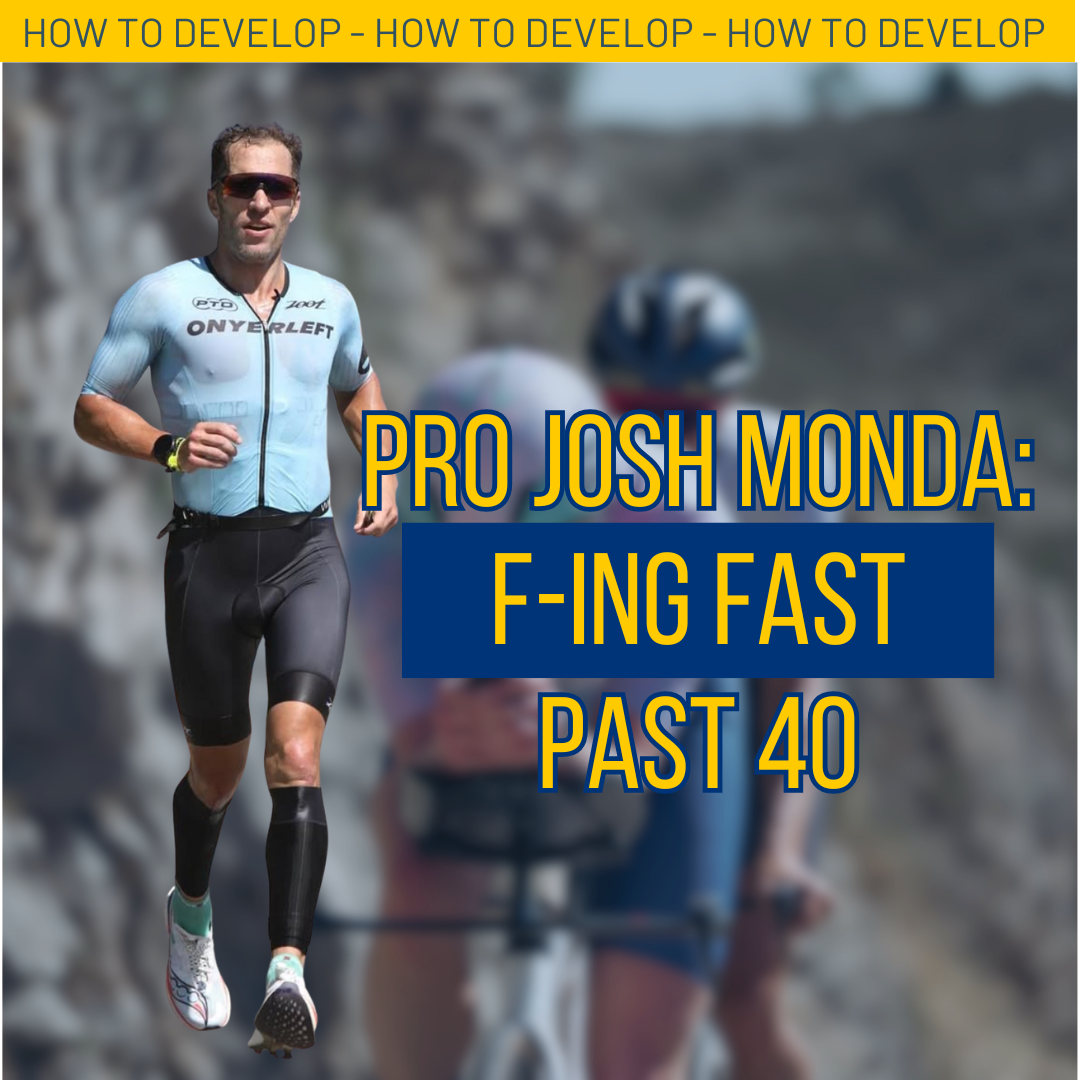
Episode 27: F-ing Fast Past Forty: Pro Josh Monda Keeps Getting Faster
Josh Monda raced as an age grouper for 17 years before turning professional at 40—displaying a patience you don’t often find in endurance sports. Josh’s story includes a five-year hiatus from the sport, personal struggles with addiction, and a long-term approach that eventually unlocked elite-level performance. Now racing for the On Your Left Professional Triathlon Team, Josh shares the training, mental, and tactical insights that enabled his late-career breakthrough.
Josh's story shows that athletic development doesn't follow a universal timeline. His patient approach, willingness to step away when necessary, and focus on consistent, sustainable training over the long haul offers a blueprint for long-term success in endurance sports—regardless of when you start or restart your journey.

Episode 19: Professional Triathlete Ben Hoffman, or “Trying to Control More Doesn't Lead to More Control”
Chris sits down with professional triathlete Ben Hoffman, who has won eight Ironmans, seven 70.3 races, and landed on the podium an unreal 28 times, one of which was the 2014 Ironman World Championships in Kona, where he finished 2nd.
The biggest takeaway from this episode, I believe, is a concept that Ben returns to several times: you simply let your body express what it has been trained to do on race day, with a slight aim for "a higher level" because you are rested.

Episode 7: How to Train to Give Yourself a Chance to Qualify
Now that Ironman World Championship season is over for the year, after the women raced in Nice last month and the men just raced in Kona, we thought it would be helpful for those of you excited about those races to hear what it takes to qualify for them.
Too many athletes believe that qualifying for races such as Kona, Nice, and Roth (all long distance triathlon) requires speed. It doesn’t. Qualifying for these races (which is another way of saying “executing this difficult distance effectively”) requires a physiology that doesn’t slow down.
In this episode, which is the audio from a webinar our owner, Chris, gave a few times in October, we walk you through a common misconception about long course triathlon racing and how to change your training so you can give yourself the best possible chance of qualifying.
If you would like this content as a video, you can watch the presentation over on our YouTube channel.
And, finally, if you would like the presentation from this webinar, you can grab it here.