
THE QUALIFIED SELF
Learn to Track Both Objective AND Subjective Metrics for Endurance Mastery

You've heard of the “Quantified Self.” Heart rate, watts, TSS, IF, EF, macros, micros, blood lactate, HRV — the whole beautiful, anxious spreadsheet of modern endurance training. Athletes I coach are drawn to it. They want their workouts to hit prescribed numbers exactly, as if coloring inside the lines guarantees the masterpiece.
Today I want to agree with some of that instinct — and complicate the rest of it. Training quantitatively AND qualitatively is a key aspect of your development into the whole athlete you didn’t even know you are becoming.
The Problem with Painting by Numbers
Faith isn't something you encounter often in endurance training circles. Not religious faith — athletic faith. The belief that the work you're doing right now is building something you can't yet see.
When you open a training calendar and write in next year's A-race, you're admitting something important: a gap exists between the athlete you are today and the athlete you'll need to be in nine months. That gap is the whole point. If you already had the fitness, you'd just show up and race. You don't, so you prepare.
Every workout is a single step across that gap. Believing that today's seemingly too-slow long run is laying the foundation for something real — even though it doesn't feel fast, even though the numbers look uninspiring on the screen — is where faith earns its keep.
An over-reliance on numbers actively undermines that faith. When every workout becomes a referendum on whether you're on track, you stop trusting the process and start auditing it. Anxious auditing is not the same thing as training.
Getting It Mostly Wrong for a Long Time
Swimming is my go-to analogy here, because the stroke is genuinely complex. The breath can't inhibit rotation. The feet need to stay connected but not sink. The catch has to happen in the right sequence. All of it has to organize itself simultaneously — and arriving at that coordination takes years of iteration, not months of perfection.
The athletes I coach who struggle most with technique are often the ones who want to fix everything at once. They're putting the catch before the breath. Getting it mostly wrong — and a little right — for a long time is what eventually gets you all the way right.
The same principle scales up to full training seasons. A workout isn't a dress rehearsal for race day. It's one block in a pyramid you won't see completed until you're standing on the start line. Judging that workout — or yourself — against the athlete you'll be in nine months is a guaranteed recipe for frustration.
The long run today is not your event. The race is still months away. Act accordingly.
The Numbers Aren't the Enemy
None of this means throw out your power meter, ignore your pace data, or train by vibes alone. The tools are real. They're useful. I use them every day with the athletes I coach.
The key is keeping them in their proper place: as support structures, not tyrants.
Two examples I think about often:
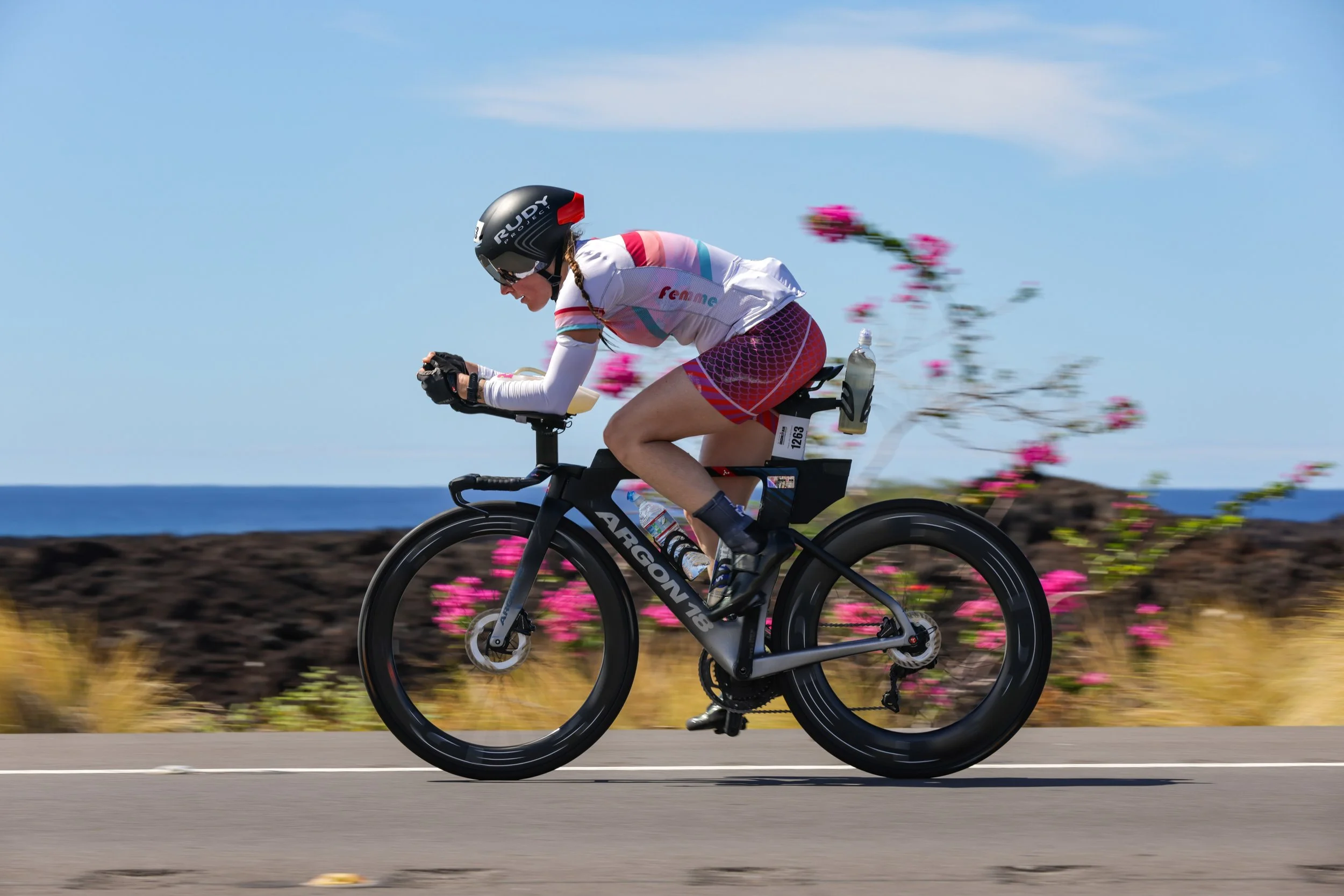
Sebastian Kienle won the Ironman World Championship with one of the fastest bike splits in the field — without a power meter. He'd tried one, found it made him chase numbers instead of race intelligently, and set it aside. Heather Jackson, one of the most gifted racers I've had the privilege of knowing, deliberately stepped away from her power meter for a stretch for the same reason. She'd always had an uncanny ability to find exactly the line she could push to and hold through the final meters. The numbers were starting to get in her head.
Both of them had internalized the data deeply enough to race without the crutch of seeing it in real time.
Try This Once
On a mid-week ride a few years back, I had three 25-minute Ironman-pace intervals to hit. I made the first two in the mid-260 watts. On the third, I decided to ignore my computer entirely.
It was harder than I expected. The urge to check in — for affirmation, for reassurance — was almost physical. But I kept my head up, let the Portland landscape roll past, and found a rhythm that felt right. My brain settled into that meditative groove endurance athletes know and love.
When I coasted to a stop light at the end of the interval, the computer auto-paused. Its little chime rang out.
23:02. 264 watts average.
The number was there when I needed it. It just didn't need to be there every second I was earning it.
What "The Qualified Self" Actually Means
Quantified means measured. Qualified means nuanced — having conditions and context attached.
Abandoning measurement isn't the goal. Being a little less certain that the numbers tell the whole story is. Stay curious about what you feel, not just what you read. Be willing to get it mostly wrong for a long time.
The athlete who can do that — who can trust the process even when the numbers aren't perfect — is the one who arrives at race day with something the spreadsheet can't capture: confidence earned through faith in the work.
Next up in this series: practical tools for building internal calibration — how to use your data intelligently without letting it run the show.