
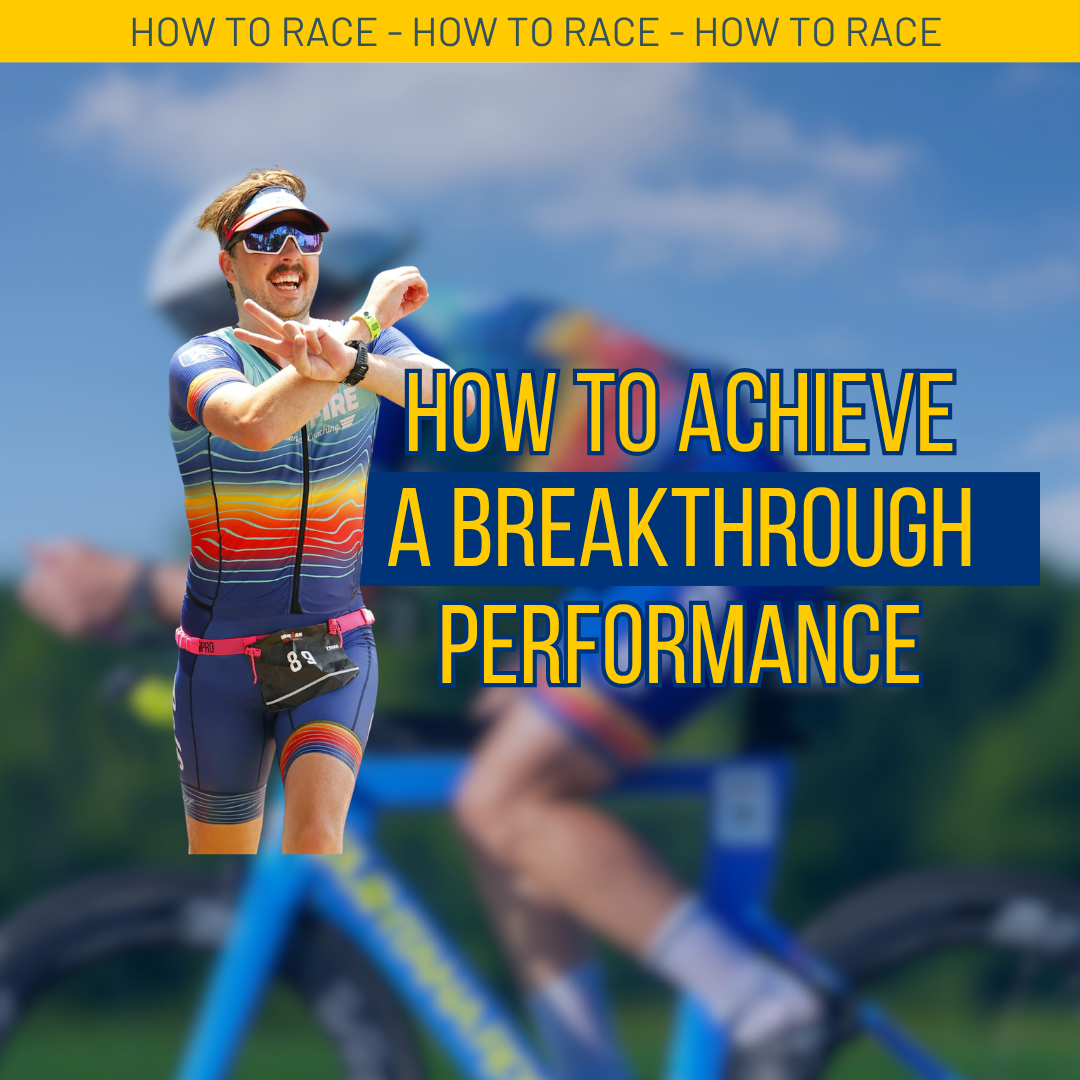
Episode 52: How to Achieve a Breakthrough Performance with Mark McCabe
Mark McCabe wrote triathlon into his social calendar in 2020, stayed stuck at a 5:45 for four years, and then decided to find out what would happen if he actually gave the sport what it was asking for. Two and a half years of consistent work later — including a build block that got replaced by 23,000-step days in Italy, a Zoltar fortune machine in a casino, and instructions from his coach that scared his wife — he finished Ohio 70.3 in 4:11:50, jumped from the 62nd percentile to the top 8% of his age group, and posted a 21-minute PR. This is the conversation about what actually caused that. Chris and Mark go through the volume data, the carb-loading protocol, the race-week preparation, the emotional regulation that kept the run from unraveling, and the mindset shift that made doubles feel like a gift instead of a punishment. Along the way, Chris shares his own breakthrough race — Ironman Canada 2011 in 97-degree heat — and the decade of volume that preceded it. If you have been stuck at the same result for longer than you would like, this is the episode to listen to.

Episode 51: Three Endurance Skills that Lead to Mastery
I see the following situation far too often: an athlete who is completely reliant on their devices, doesn’t practice their fueling, and cannot change a flat tire. This kind of reliance is deeply fragile: it doesn’t take much to break it on race day. In this show, I walk through the three most important skills to an endurance athlete’s success, and there are far more qualitative measures than quantitative. We cover pacing, fueling, and equipment proficiency, ending with practical directions to improve at all three.
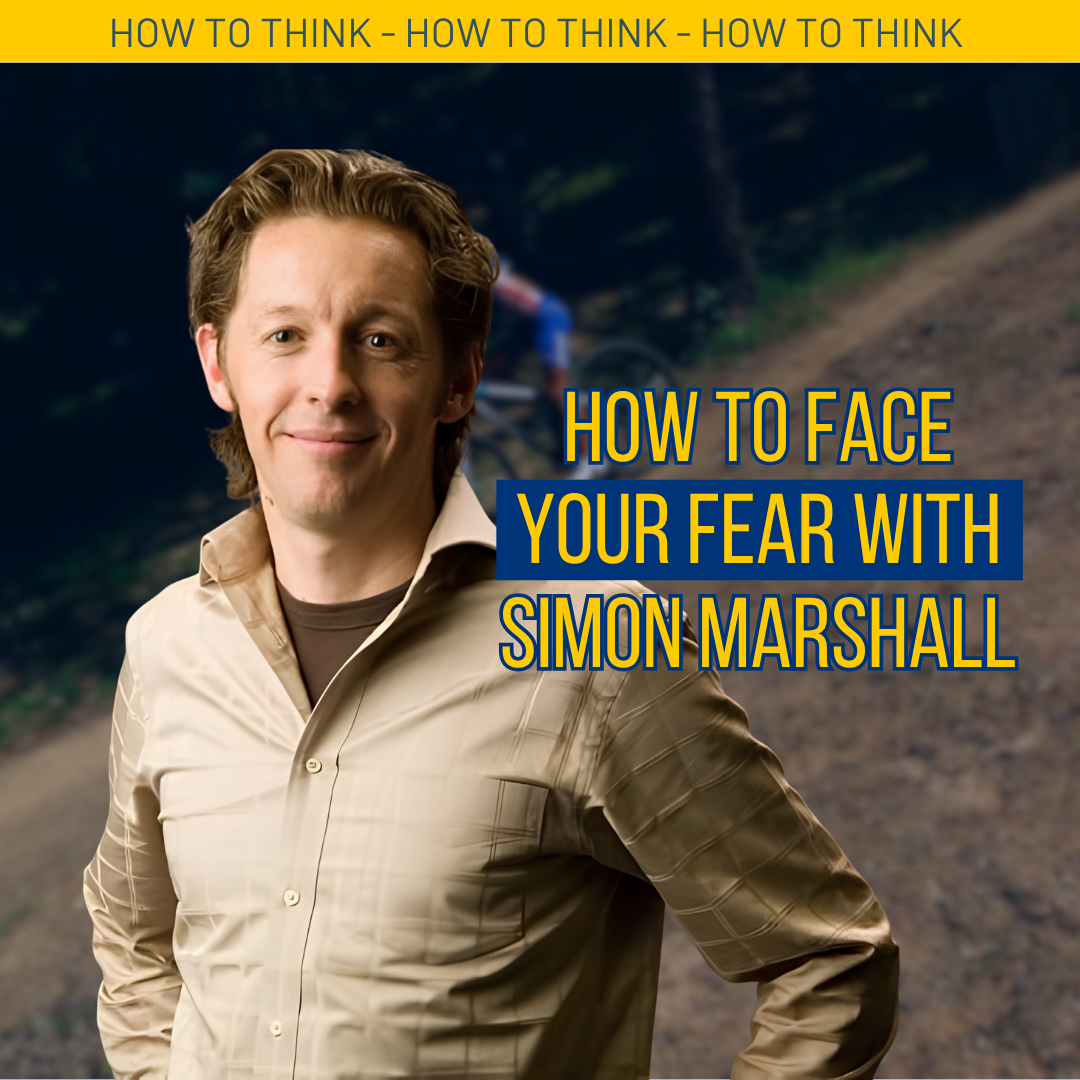
Episode 49: How to Face Your Fear w/Sports Psychologist Simon Marshall
Simon Marshall has worked with many high-level endurance athletes out there, and in this conversation he makes the case that the mental side of sport is the part most of us skip…right up until it costs us a race. Recorded during the pandemic and shared again in Simon's memory, the episode digs into what actually decides how race day goes: why everyone walks to the start line a little terrified, why your brain treats one bad comment like Velcro and ten good ones like Teflon, and why "just find your passion" is mostly a myth.
Simon, who wrote The Brave Athlete with his wife, five-time world champion Lesley Paterson, also hands over tools you can use this week — an alter-ego exercise that will help you face difficult situations, how to microdose dopamine, and the quiet skill of embracing the suck. It's funny, honest, useful, and heartwarming, which is to say…it’s a lot like Simon. We miss you, man.
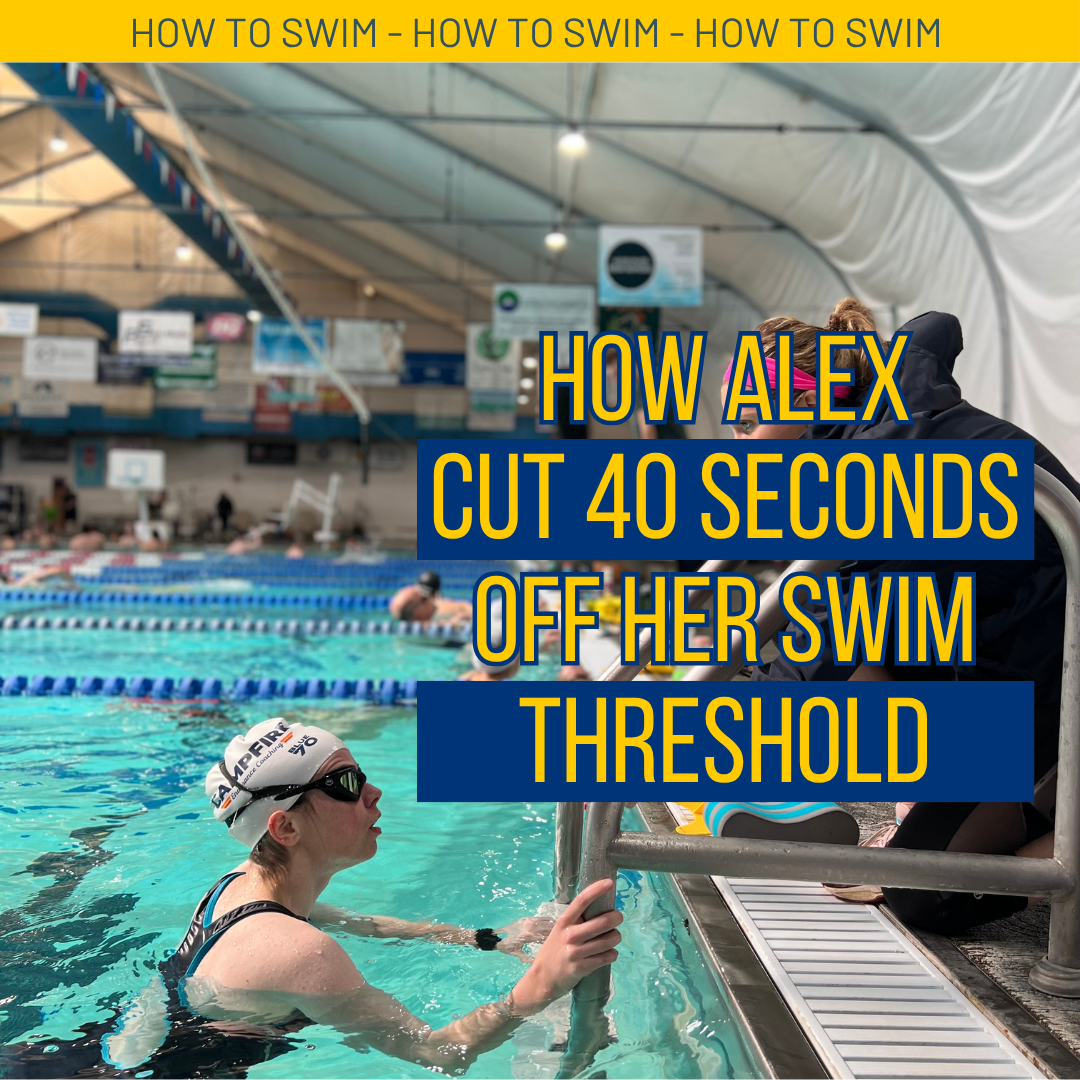
Episode 48: Deliberate Practice in the Pool Leads to a TEN-MINUTE Olympic-distance Improvement
Swim improvement is slow, frustrating, and worth every minute — and this episode is proof of that. Chris walks you through Alex W.’s amazing 2:35 to 1:52/100 threshold pace improvement in today’s episode: what wasn’t working, what Chris prescribed, and how Alex took the reins and put in the hard work. We track her development step by step: the front quadrant breakdown that was costing her propulsion, the drift toward her breathing side that threatened her open water navigation, the elbow angle problem that was limiting her pull power — and the specific drills that addressed each one. Along the way, Chris explains why triathlon is an energy cascade, what deliberate practice actually requires, and why more yardage without technique work has a ceiling that most swimmers hit much sooner than they expect. If your swim has been stuck at the same pace for longer than you'd like to admit, this is the episode to listen to twice.
Links mentioned in this episode:
Book a swim analysis with Chris: campfireendurance.com/swim-analysis
Swim Smooth (methodology and drill references): swimsmooth.com
Campfire Endurance coaching (spots opening July 2026): campfireendurance.com or email chris@campfireendurance.com
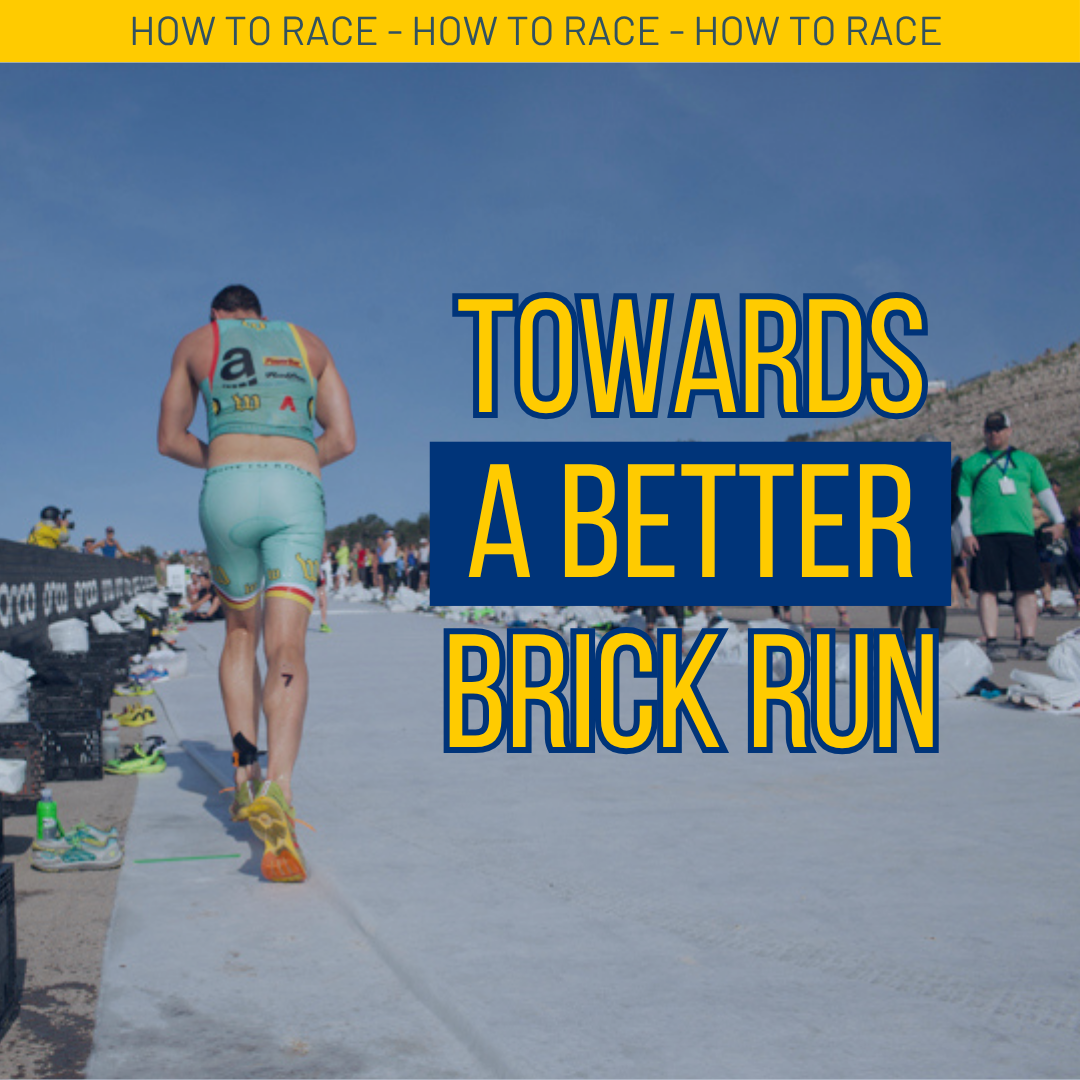
Episode 46: Fixing the Brick—Four Studies on Running Off the Bike
The difference between a well-trained bike-to-run transition and a poorly trained one is up to 10% of your run performance — and most athletes have no idea why it happens or what to do about it. In this episode, we look at four peer-reviewed studies on the physiology of brick runs, covering the nervous system disruption that starts before you even dismount, the fueling and breathing problems that peak in the first seven minutes of the run, and the biomechanical breakdown that results in the dreaded “Ironman hunchback.” You know you’ve seen that out there in the wild.
You'll learn why long brick runs are a waste of training time, how riding with high variability hurts your transition runs, and exactly what a productive brick workout looks like. Practical, research-backed, and we got it in under 30 minutes!
Episode 45: Durability and Fatigue Resistance with Coaching Legend Joe Friel
Joe Friel — author of the Triathlete's Training Bible, co-founder of TrainingPeaks, and one of the most influential coaches in endurance sport — joins me for a conversation centered on durability: what it is, how it is built, and why it matters more than most athletes realize. Joe explains how he developed the concepts of heart rate decoupling and efficiency factor in the early 2000s — more than fifteen years before sports scientists gave durability a name — and walks through the three-phase training structure he uses to build durable athletes from the ground up. The conversation covers zone one and zone two training, the discipline of race-specific pacing, AI's role in coaching, and Joe's revised edition of Fast After 50, due out in June 2026. If you work with long-course athletes, or if you are one, this episode will help you understand why an athlete holds on late in a race versus one who doesn't.

Episode 44: Triathlon Only Has Two Zones
One of the issues with the established training zone systems out there is that, very often, there are more zones than we need, particularly for multisport training and racing. When zones were first established, most of the data came from road cyclists, who have more dynamic events and different demands placed upon them while competing.
In a triathlon—even a short course triathlon—the goal is a steady, moderately-hard effort that you can hold for a long time. In this monologue episode of The Infirmary, I make the case that triathletes need just two training ranges: endurance and speed. I talk about how training actually works — oxygen delivery, blood volume, capillary density, mitochondrial function, muscle fiber recruitment, metabolic efficiency — and show why the moderate and heavy exercise domains can and should be collapsed into a single endurance range for multisport athletes.
I also address why a seven-zone system can actually hurt your training as a triathlete, why "anaerobic threshold" is a misleading term, and why your threshold intervals shouldn't be killing you—they are part of the endurance side of things, NOT intensity. We wrap things up with a practical breakdown of how to apply perceived exertion and training intensity distribution across a season.
Links mentioned in this episode:
Jesse Dukes' one-day "How to Get Good Tape" Los Angeles Workshop: https://jessedukes.com/good-tape-how-to-get-it-2/
Book a free training consultation: https://tinyurl.com/mu8d8tux
Join the Campfire Discord community: https://discord.gg/3Uq989QFX4
Episode 43: The Science of Sweat | How to Actually Fuel and Hydrate for Endurance with Tash Cooper-Smith
Sports scientist and triathlete Tash Cooper-Smith from Precision Fuel & Hydration joins The Infirmary to demystify one of endurance sport's most confusing topics: fueling and hydration. Tash breaks down sweat testing, sodium concentration, carbohydrate intake, gut training, and the real science behind cramping — and why the answer to most athletes' fueling problems is rarely as complicated as they make it. She also shares the story of her own athletic journey, from competitive gymnastics to Kona qualifier in four years, and what that experience taught her about personalizing nutrition for performance.

Episode 41: “‘Metabolic Efficiency’ is Just a Fancy Term for Getting Fit w/Elite Endurance Coach Ryan Bolton
Ryan Bolton is an Olympian, competing at the first Olympic Triathlon in 2000, and he is also a long course champ, winning Ironman Lake Placid in 2002. He coaches America’s top-ranked short-course triathlete, John Reed, and coaches or has coached Olympic Morgan Pearson, triathlon legend Ben Hoffman, recent star Sam Long, and many, many others. Ryan and I talk about a huge range of topics, including artificial intelligence (AI) in the coaching space, why “metabolic efficiency” isn’t anything you need to really pay attention to because it will happen as you get fit, and what it means to focus on “$100,000 wins” instead of “$500 wins.”
You can find Ryan at https://boltonendurance.com/ and on his social media accounts: @coachryanbolton and @boltonendurance. You can (and should!) listen to my interview with Ben Hoffman, whom Ryan Coached for most of Ben’s career.

Episode 40: “Where Is My Mind? Flow State, Focus, and Interval Meditation”
Coaches and athletes talk about the semi-mythical “flow state” a lot, but there is precious little information about how to achieve flow state. Those same coaches and athletes seem to leave it up to chance, but as you all (I hope) know, hope is not a strategy!
In today’s episode, which is the companion piece to the guided meditation just below this one in the feed, we talk about ways to practice presence in your training and racing, since all that flow state is is a state of heightened presence in the moment, when distractions and obstacles seem to fall away. If you read last week’s Substack post, you’ll see the connection here to getting away from thinking, because when we think we tend to make judgments, and if you are judging you are reflecting or ruminating, not present in the moment.
The episode opens with a real athlete meltdown (the kind most of us have had at some point) to explore how perception and self-judgment are the first things standing between you and your best performance. From there, we make a connection between traditional meditation and the way you approach a hard interval — and explains why those two things are basically the same skill. You don't need an app, a cushion, or a monastery. You need your next workout and a willingness to notice where your brain actually goes when things get hard.

Episode 39: “10-Minute Guided Interval Meditation”
The companion piece to Episode 40, this is is a guided meditation that will help you discover what your brain and body wants to do during a difficult interval or during a race. Practice this meditation to improve your ability to maintain a wide, soft, presence that improves your chances of accessing flow state in your training, racing, and life.
Book a free training consult with Chris here: https://tinyurl.com/3b8shdav
Episode 38: From a Ten-Year Break to 9:03 at Roth: Ultraman World Champion Gordo Byrn
Endurance coaching legend Gordo Byrn joins us to discuss his return to racing after a 10-year break. The 2002 Ultraman World Champion and author of From Lemon to Legend breaks down his training philosophy that led to a 9:03 at Challenge Roth. We explore why consistency matters more than any specific workout protocol, how he rebuilt his aerobic base starting with workouts so easy he didn't believe they'd work, and why most athletes overcomplicate their training. Gordo shares his "10, 20, 50" protocol and explains how patient application of ridiculously easy training builds the efficiency required for world-class endurance performance. Whether you're returning to the sport after time away or struggling to maintain consistency, Gordo offers a masterclass in sustainable high-performance training from someone who's mentored a generation of endurance coaches.
Episode 37: Coaching The “Emotional” Athlete
For well over the first half of my professional career, I was labeled an “emotional athlete.” That label seemed to mean, well, something else. In this case that “something else” appears to have been “undisciplined,” if the describer was being nice, or “riding like a stupid asshole,” if the describer wasn’t concerned with hurting my feelings. Faced with this description, which wasn’t ever really elucidated further until later in my career, I set about eradicating the problem. I had a problem with pacing, was the coaching feedback I probably should have received, but without clear guidance on how to pace better I found myself falling into the same pattern: starting too hard in the swim and having to slow down after 2-300m and losing the main pack, burbling self-recrimination to myself for the rest of the swim leg, before climbing out of the water alone and…repeating the exact same pattern on the bike: riding too hard to “catch up,” and then, successful or not at catching up, blowing to bits on the run.
In this episode we explore why we make decisions that don’t serve us as athletes, on and off the race course. We look at how fear was the prevailing emotion behind my explosion at Canada in 2012, and how I would have handled it differently, had I the tools. I hope this episode helps someone determine the shadows they have that are driving behaviors that they don’t like.
The Mankind Project accountability exercise
Chat with Chris about your emotional game, whatever your sport.
Learn about CAMP May 29-June 2
Episode 36: “The Bonfire of Success,” with World Class Coach David Tilbury Davis
David Tilbury-Davis coaches or has coached triathlon household names such as Ashleigh Gentile, Lionel Sanders, Skye Moench, Corinne Abraham, Cody Beals, and Matt Hanson, and he’s been doing so for three decades. In this episode, David explains his “evidence-led” in contrast to “evidence-based” approaches, how he gives athletes autonomy within structured training blocks, and why understanding your race day "poker hand" matters more than race-day magic. We discuss block periodization across the four disciplines of triathlon, how the Norwegian Method is more a product of excellent professionalism, cognitive load in VO2 work, and why even successful performances need analysis. In the moment I found most affecting, David talks about how an athlete deals with setbacks separates the great from the merely good.
Episode 35: Overtrained or Just Under-recovered? The Difference That Could Save Next Season
Overtraining syndrome is rare, serious, and can end your endurance career if you're not careful. In this episode, we break down the differences between functional overreaching (proper training), non-functional overreaching (under-recovery), and true overtraining syndrome (OTS, and again, it's really rare!). You'll learn the warning signs that separate temporary fatigue from something far more concerning, plus we walk through actual case studies of athletes who took years to recover from OTS. We cover the psychological patterns that lead to overtraining, a return-to-training protocol that can get you back on the right track safely, and why consistency beats intensity every single time. If you're training hard right now or coaching athletes through big training blocks, this episode is the reality check you need before it's too late, for you or for your athletes! #triathlon #overtraining #endurancetraining